

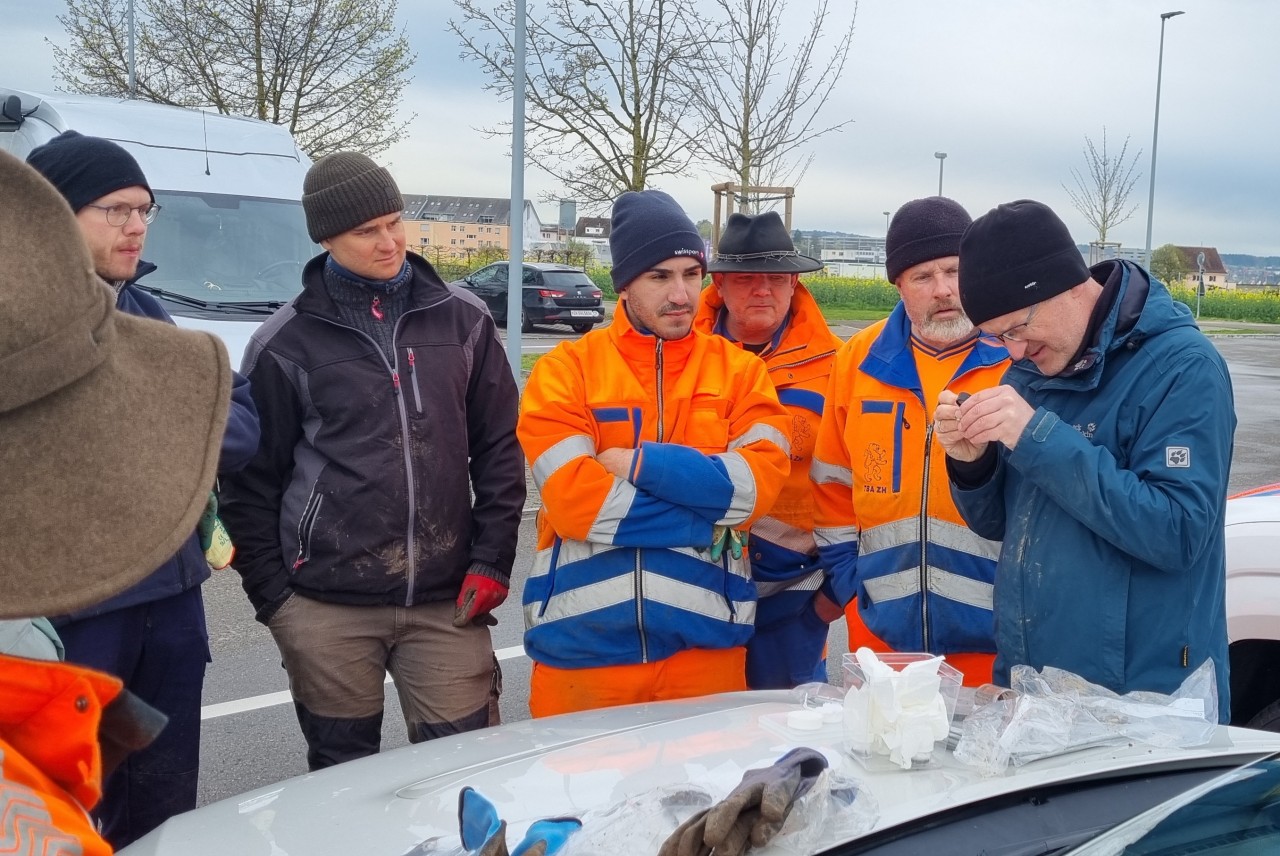
Since 2023, the village of Kloten north of Zurich is not only famous for the Zurich Airport and for having a great ice hockey team, but also for harboring the first Popillia population in Europe north of the Alps. In summer and autumn of 2023, huge efforts were made to eradicate this population, including insecticide sprays, the erection of LLINs-t...
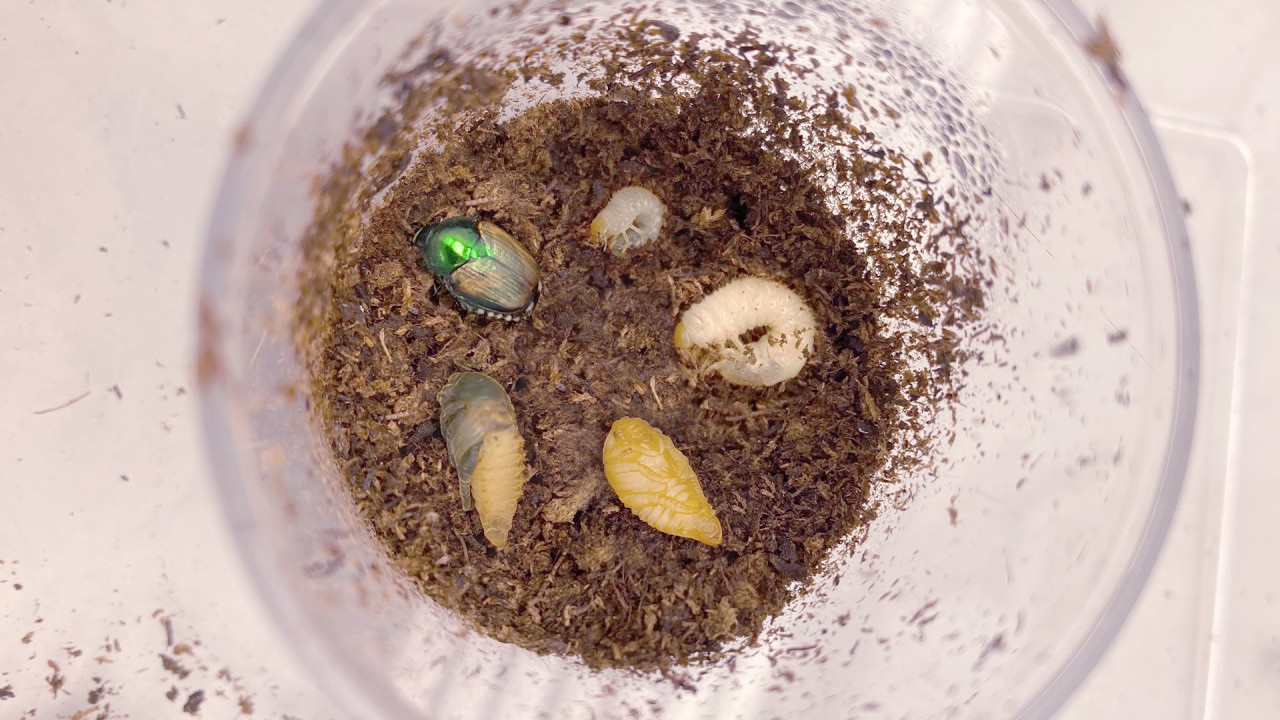
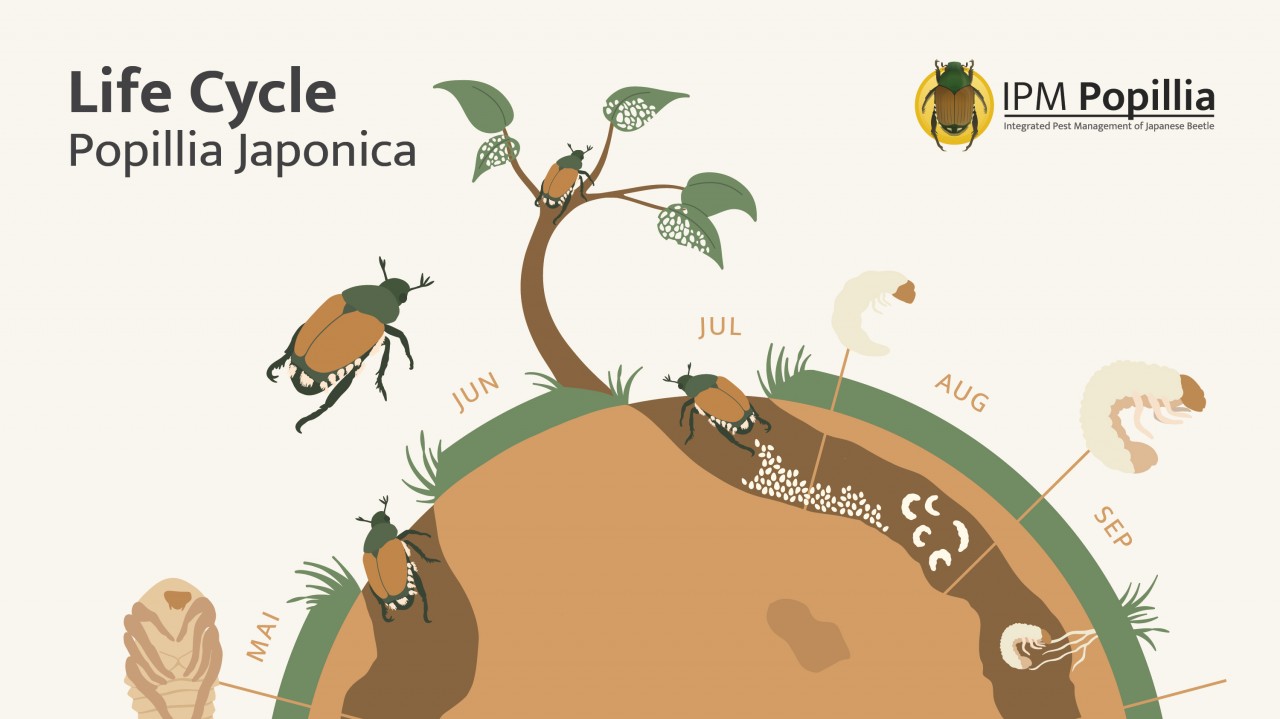
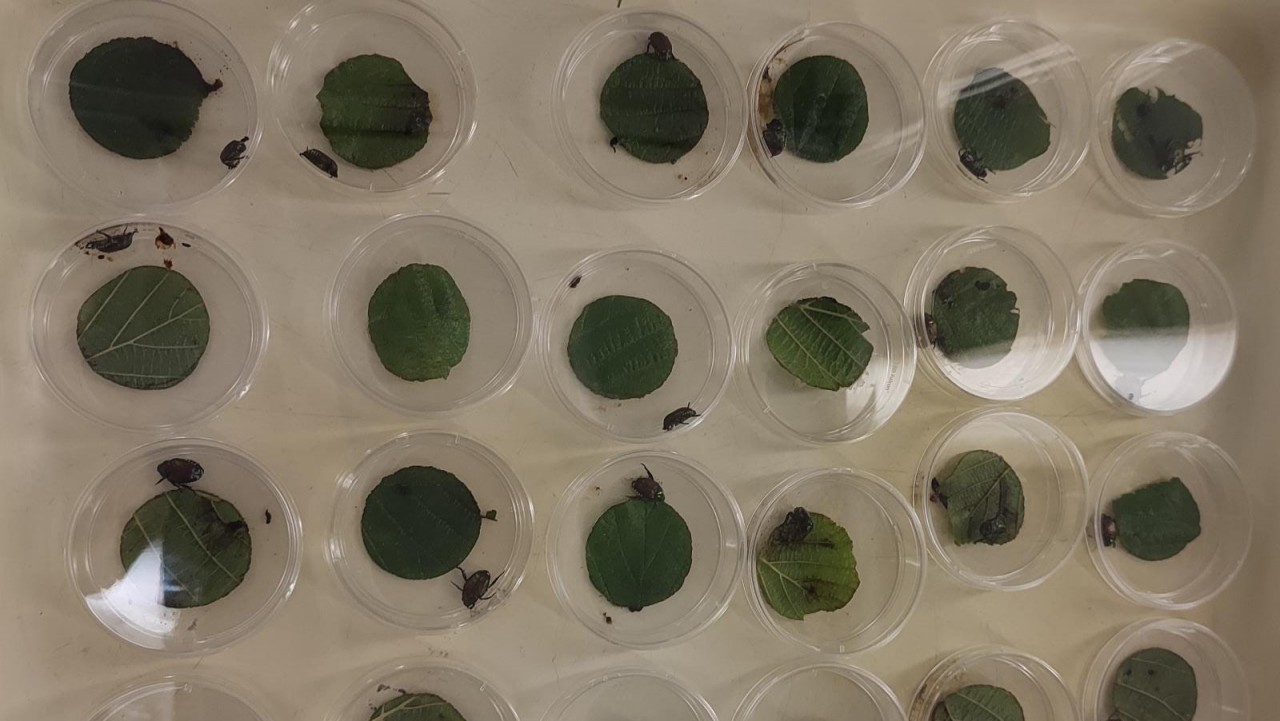
We are beyond excited to share developmental stage photos of the Japanese beetle (Popillia japonica) directly from our laboratory experiment. The Japanese beetle undergoes three larval stages, which means that the larvae do not grow steadily but develop three times until they pupate and finally emerge as adult beetles. We ...
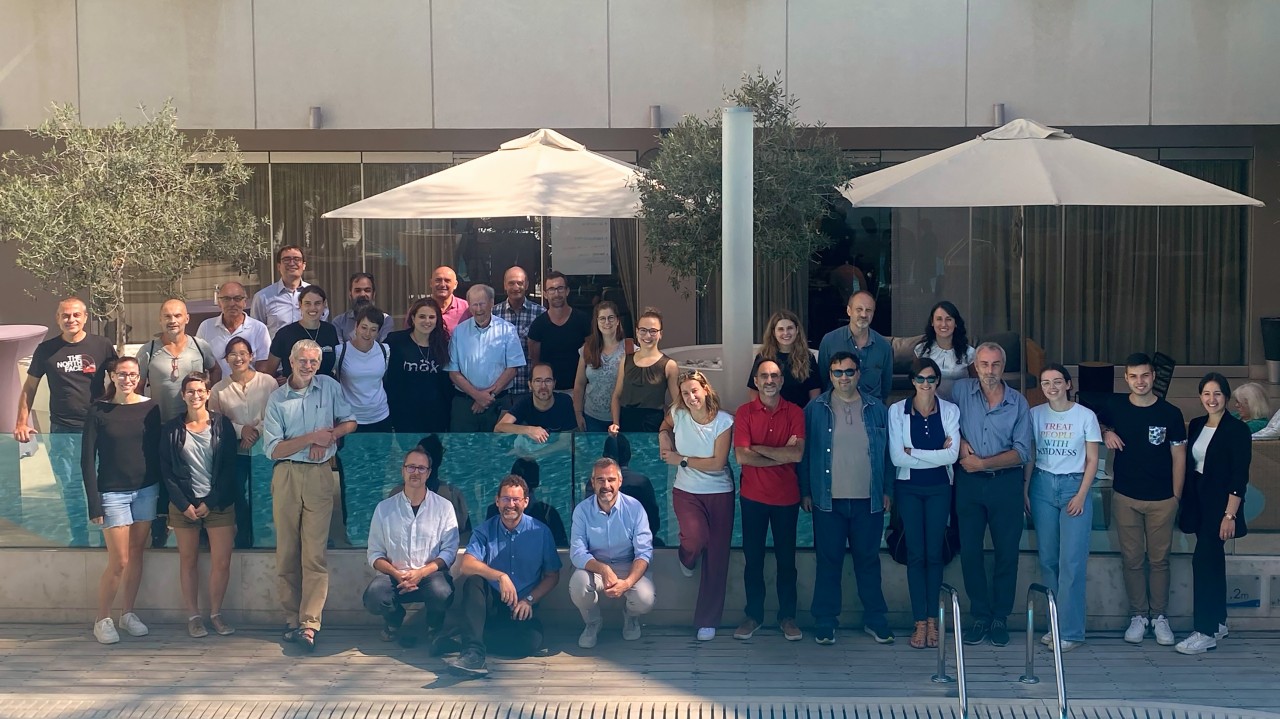
From October 18–20, 2023, members of the IPM Popillia consortium came together in Heraklion, Greece, for the yearly General Assembly of the IPM Popillia project. The event provided the possibility of gaining insight into and learning about the progress and developments made in the different interdisciplinary work packages of the project. At the sam...
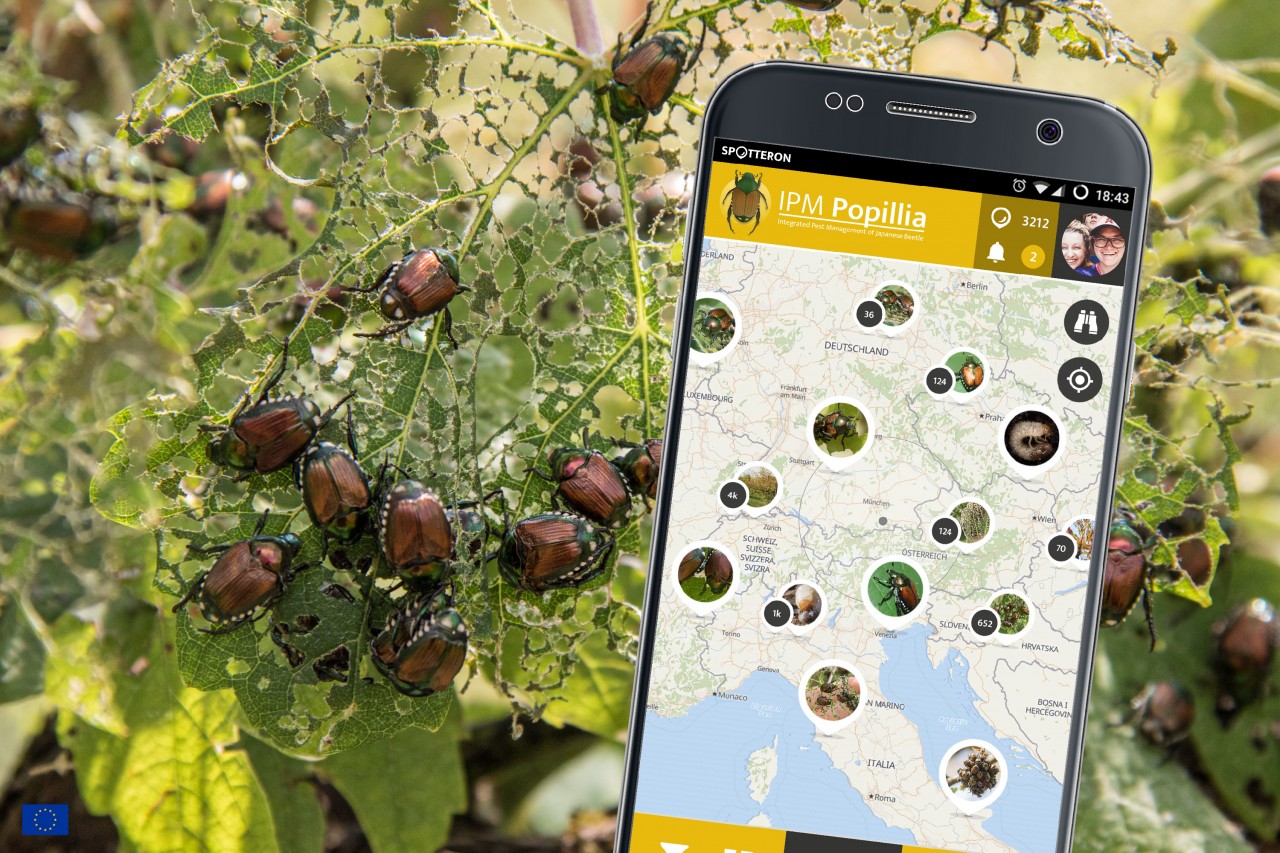
For some time now, we have opened up our Popillia Japonica research to Citizen Science. With the support of volunteer Citizen Scientists, we are trying to gather more information about the distribution of the Japanese beetle through the IPM Popillia's Citizen Science App. Invasive species such as the Japanese Beetle pose a severe threat to biodiver...
In the past months many field trials and lab experiments gave their results, and they are good results! In our lab, we found that a family of molecules called "saponins", that are naturally present in alfalfa plants, have a significant antifeedant and insecticidal effects on Popillia. Basing on this molecules, it will be possible to devel...
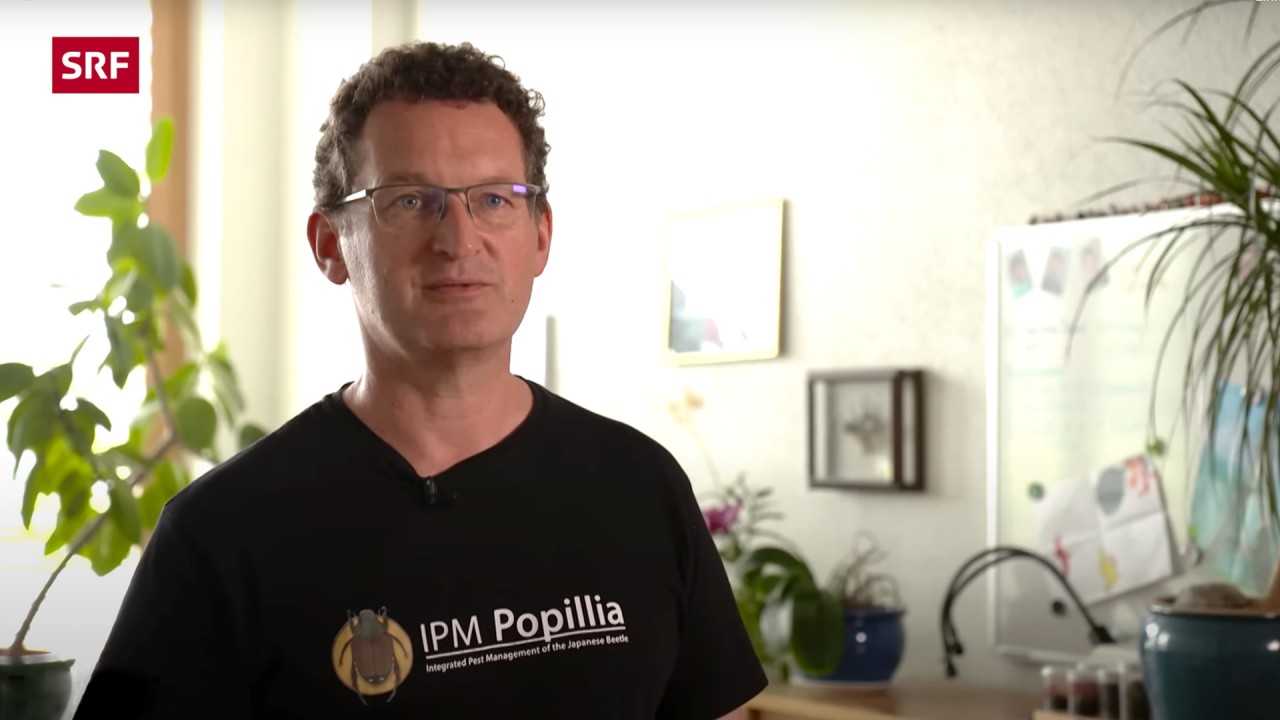
After the Azores and Italy, the Popillia japonica beetle is already present in Switzerland. SRF Wissen has recently published a documentary about invasive species in Europe, that vividly shows how important research and methods are when it comes to tackle the problem. Agroscope, coordinator of the Horizon 2020 project IPM Popillia, is rep...
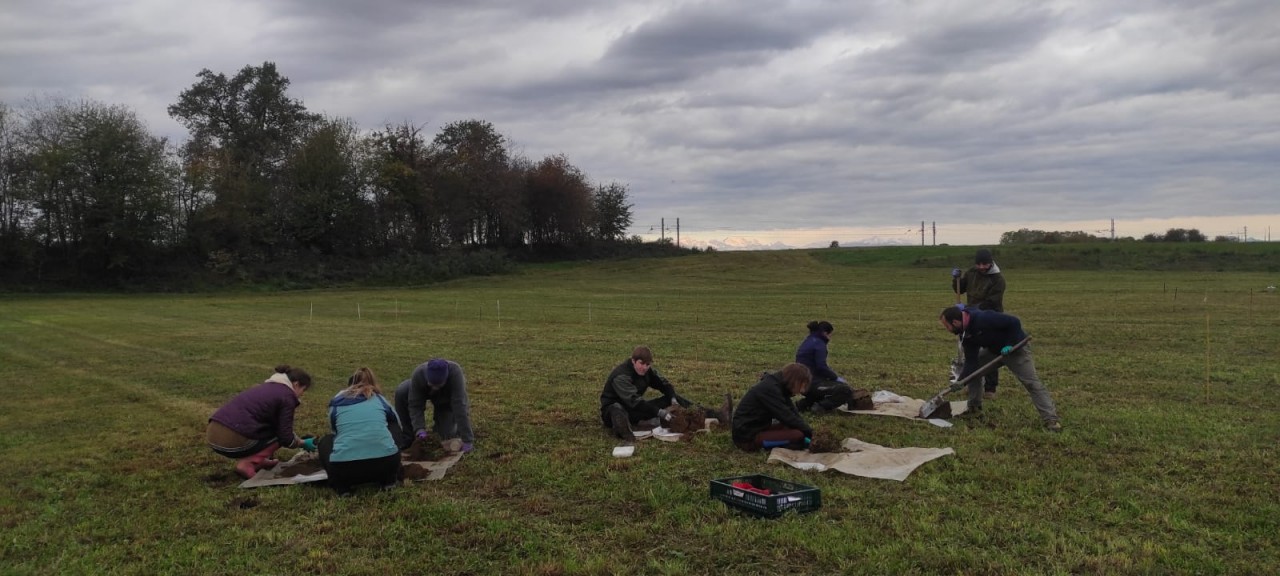
In September 2021 we started the big field experiment in the Piedmont region, a highly infested zone. Giovanni Bosio from the plant health service of the Piedmont region found meadows which were not treated yet and with willing owners to let us do experiments with different biological control agents (BCA). We treated the meadows with 2 different st...
In collaboration with colleagues from CREA (Florence), we have treated popillias with three experimental control protocols that appear as promising candidates in their hands. Treated popillias have been snap frozen for molecular analysis. In the next months we will evaluate the effects of different treatments in terms of gene expression. With these...
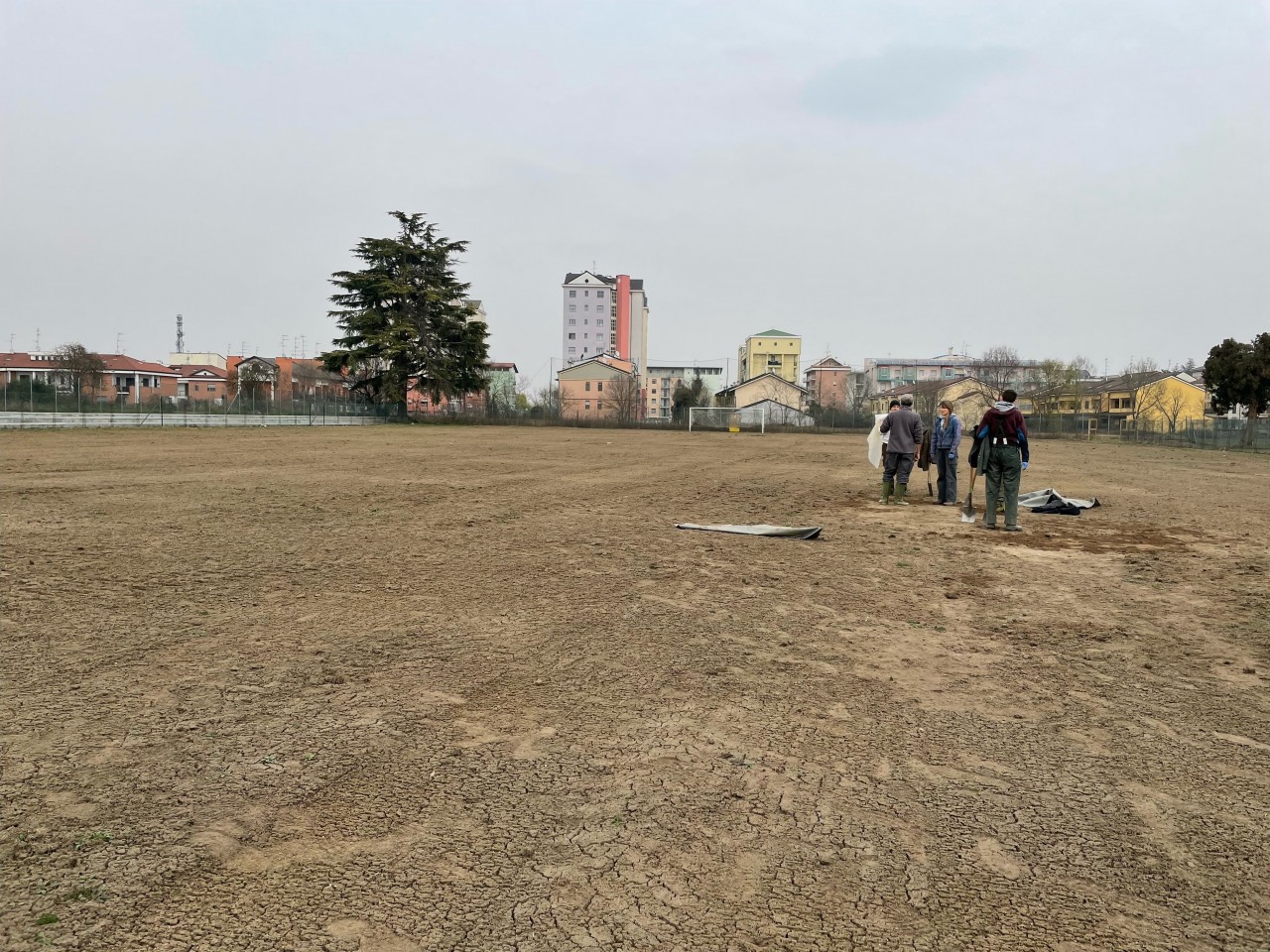
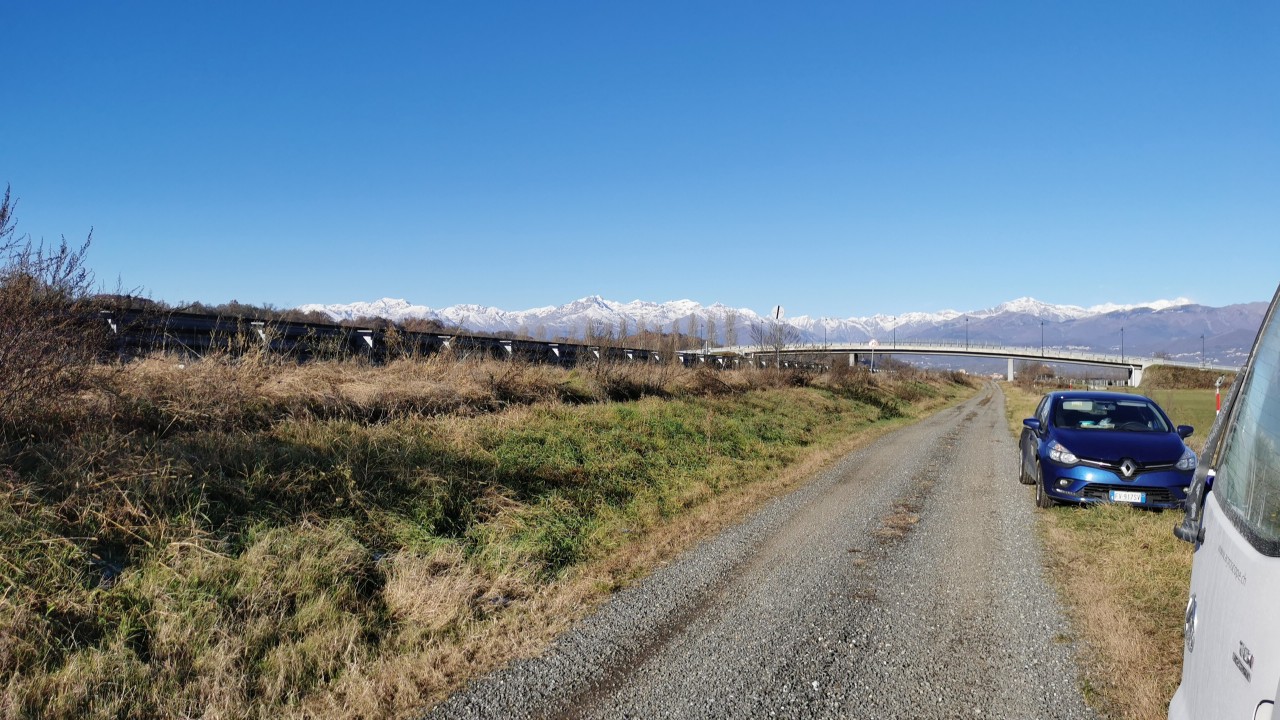
We need more larvae, a lot more larvae! That's our mission, our first in this year. This time we were headed to a field in Vercelli, Piedmont. While driving, the bus would shake and make weird noises when applying the brakes which is why we stopped a first time to inspect our tires and a second time at a mechanics to let him check properly. W...
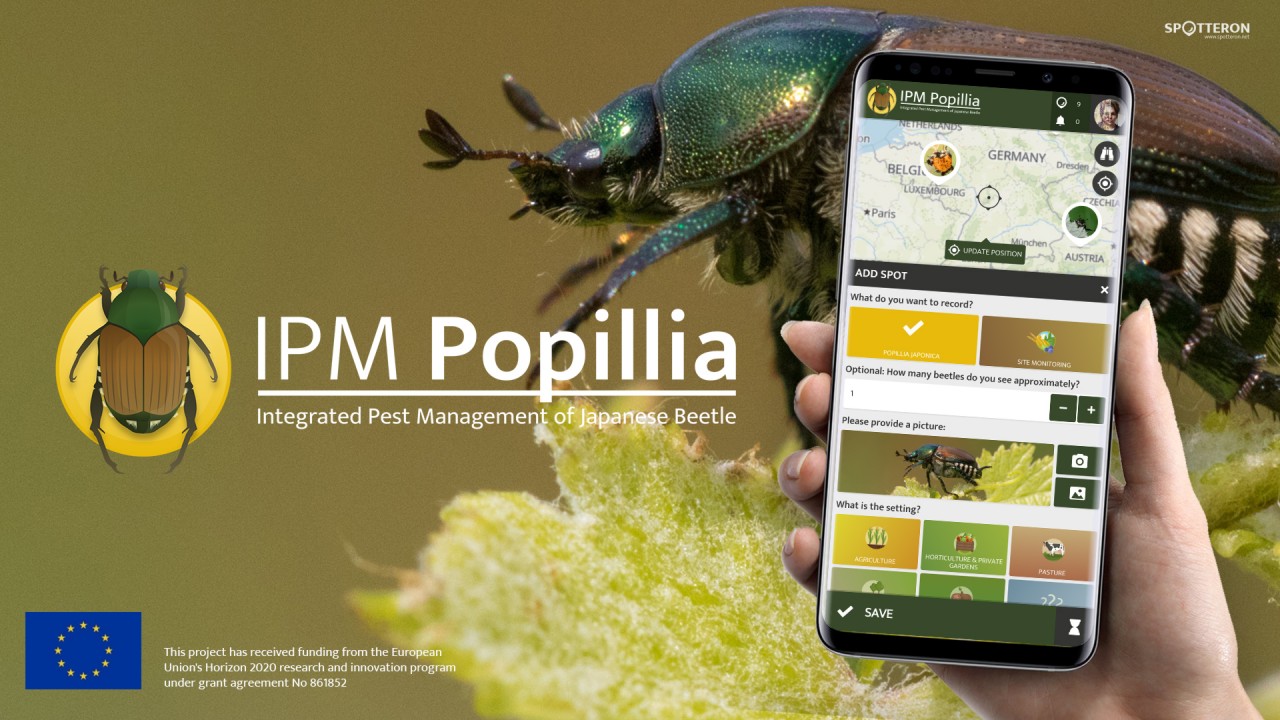
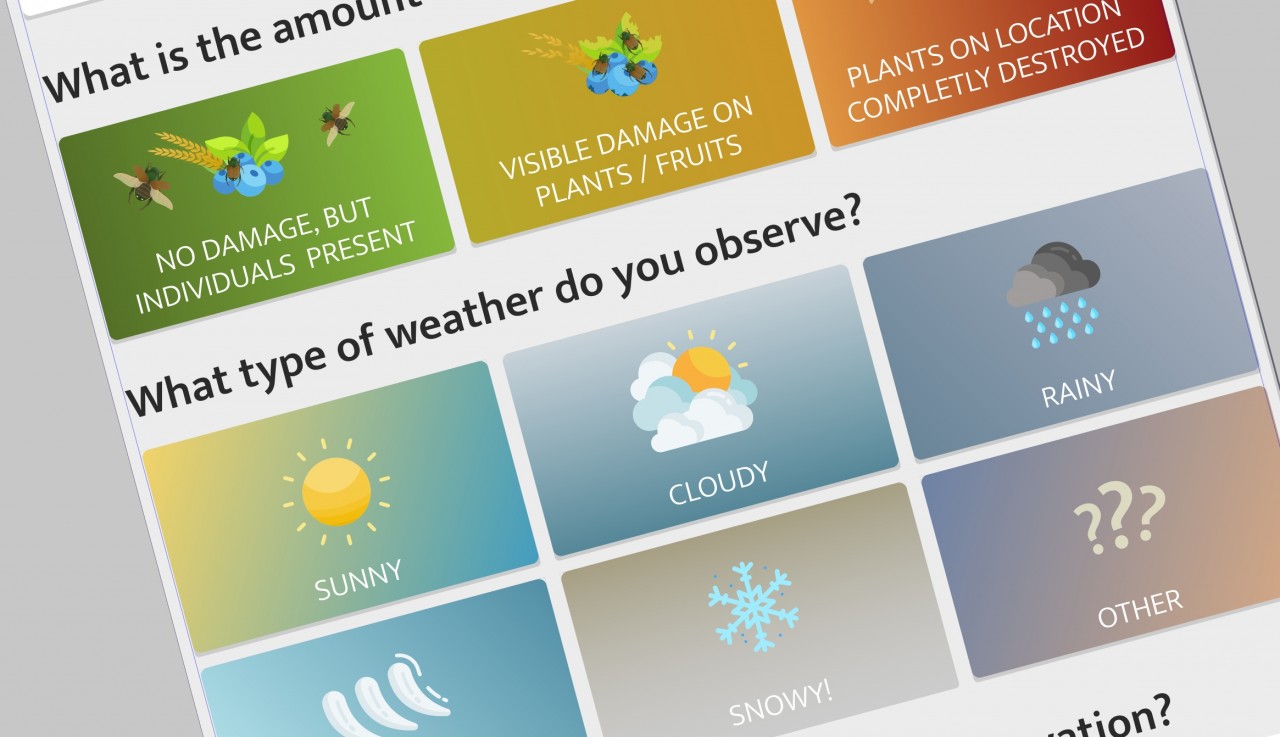
A deliverable is done. We just have released the first version of the IPM Popillia Citizen Science App! This first release marks a significant achievement; from now on, our consortium members and farmers on location can start recording Popillia japonica sightings on their smartphones and contribute to the IPM Popillia data-set. The App running...
The year 2022 has just begun. Right after the holiday season, we at SPOTTERON Citizen Science Platform have started the first phase of direct production and creating the definitions for the IPM Popilla Citizen Science Smartphone App - what a start for a year! In the past, we have already prepared many building blocks and parts to launch our fi...
To continue with experiments in the lab, we needed more Japanese beetle larvae, a lot more. So we decided to go on a field trip on the 7th of December 2021. It was the first train of the day which took me to Agroscope where we headed off to Mottalciata, Piedmont region. With two cars and seven people, we left freezing cold Switzerland in hop...
With the new year approaching, we at SPOTTERON have started planning and creating concepts for the IPM Popillia Citizen Science App for public participation. In this early stage, options are present for either having a focussed App for discovering the Popillia japonica beetle in already infested regions or to think on a broader scale for ...
What would a Japanese beetle spread cost us? - That is one of the questions which our team from the Technical University of Munich (TUM) is trying to answer. The question is simple; however, the answer is complex, depending on several unknown factors such as the potential damage the beetle can cause to different crops. For this reason, we have...